Empowering Informed Health Choices: Ciclewise's Vision for Accessible Menstrual Knowledge
Introduction
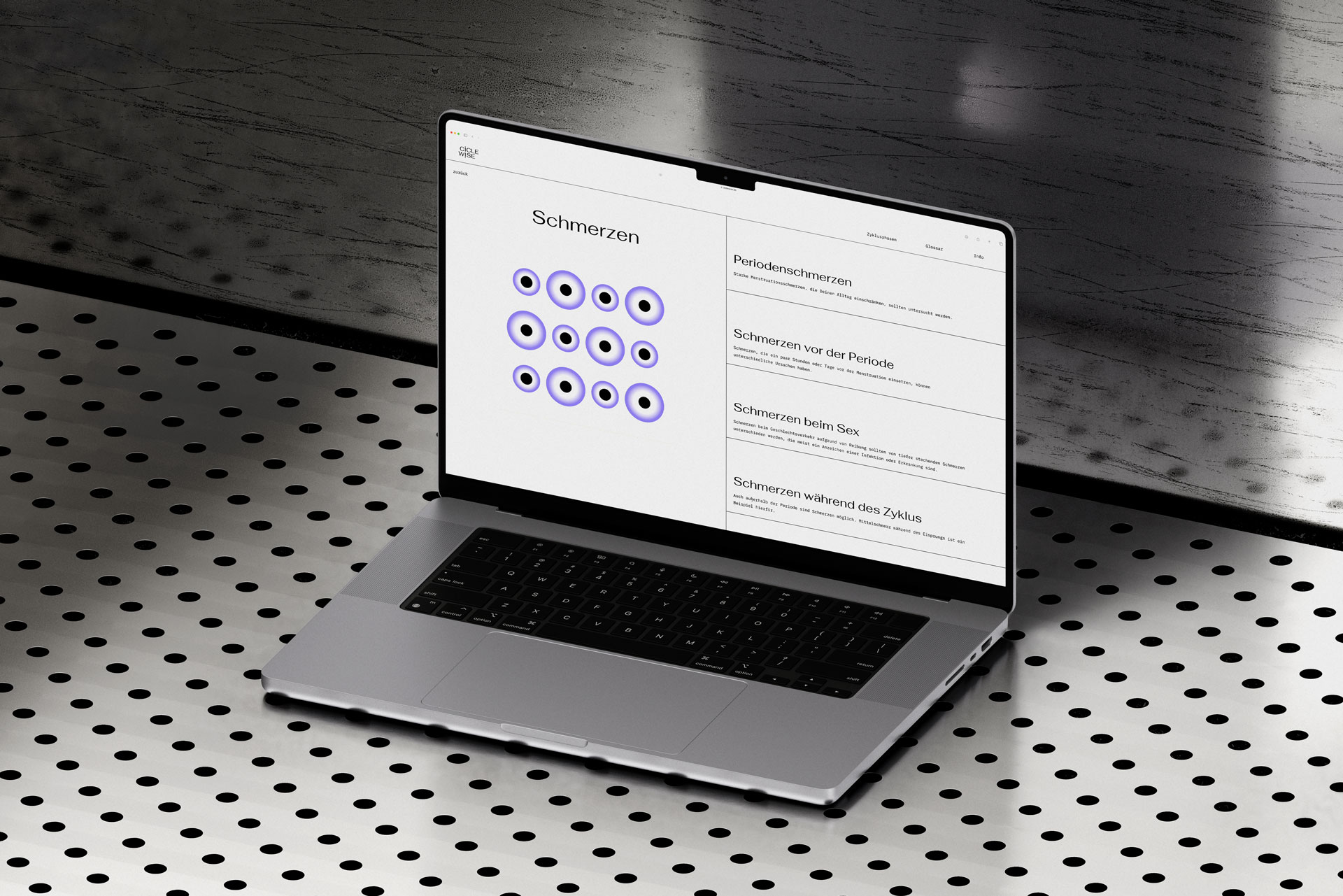
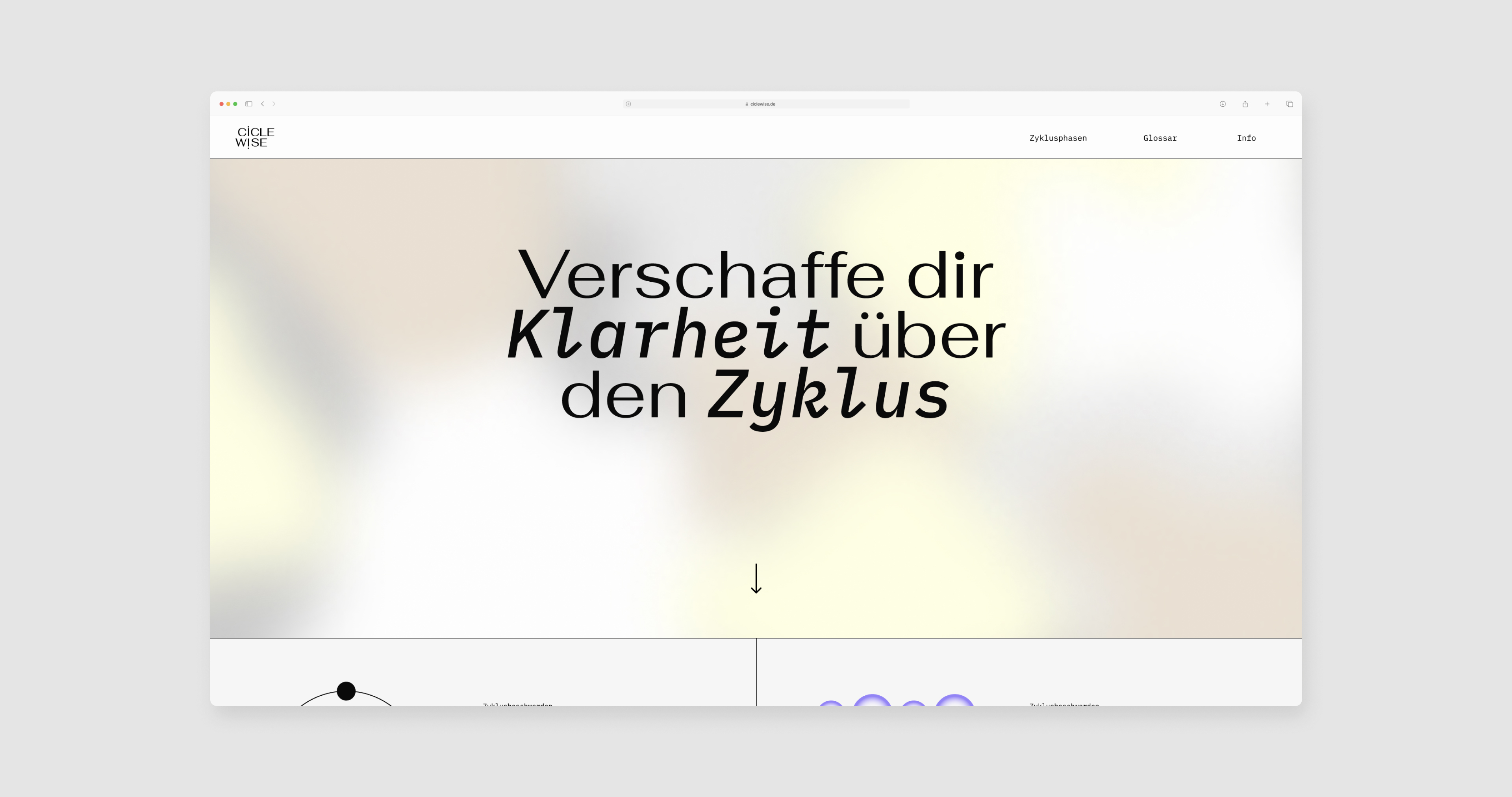
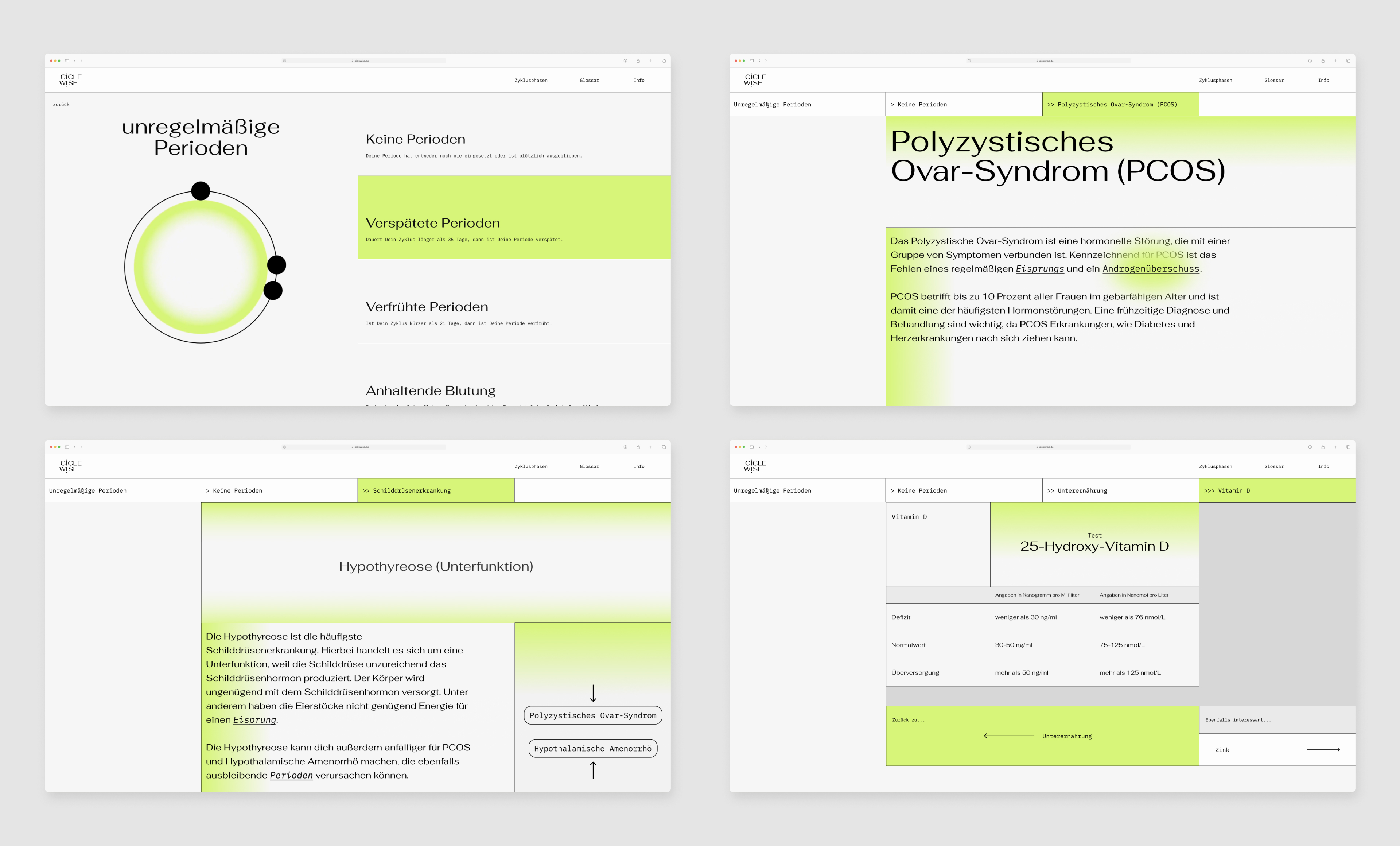
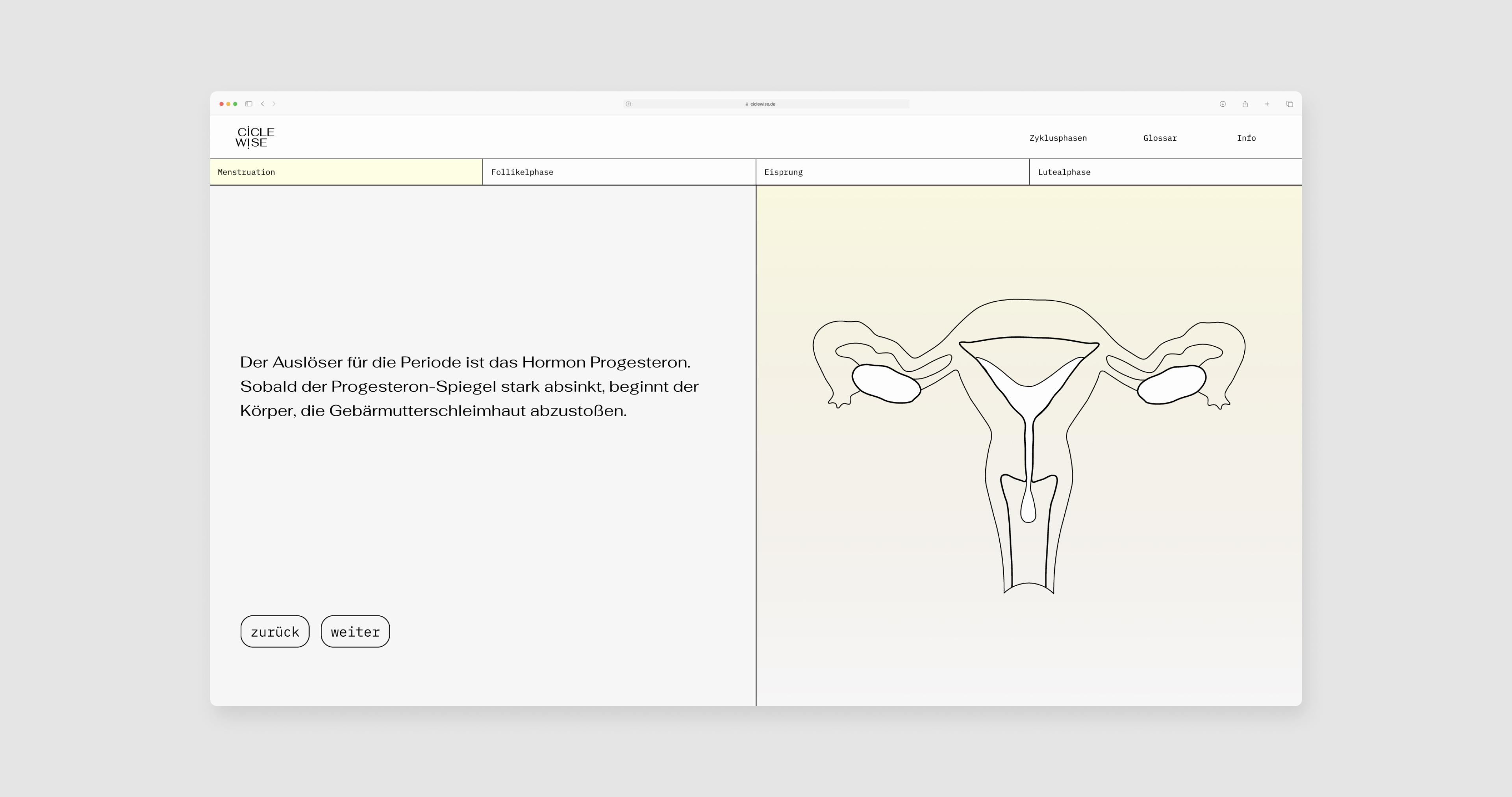
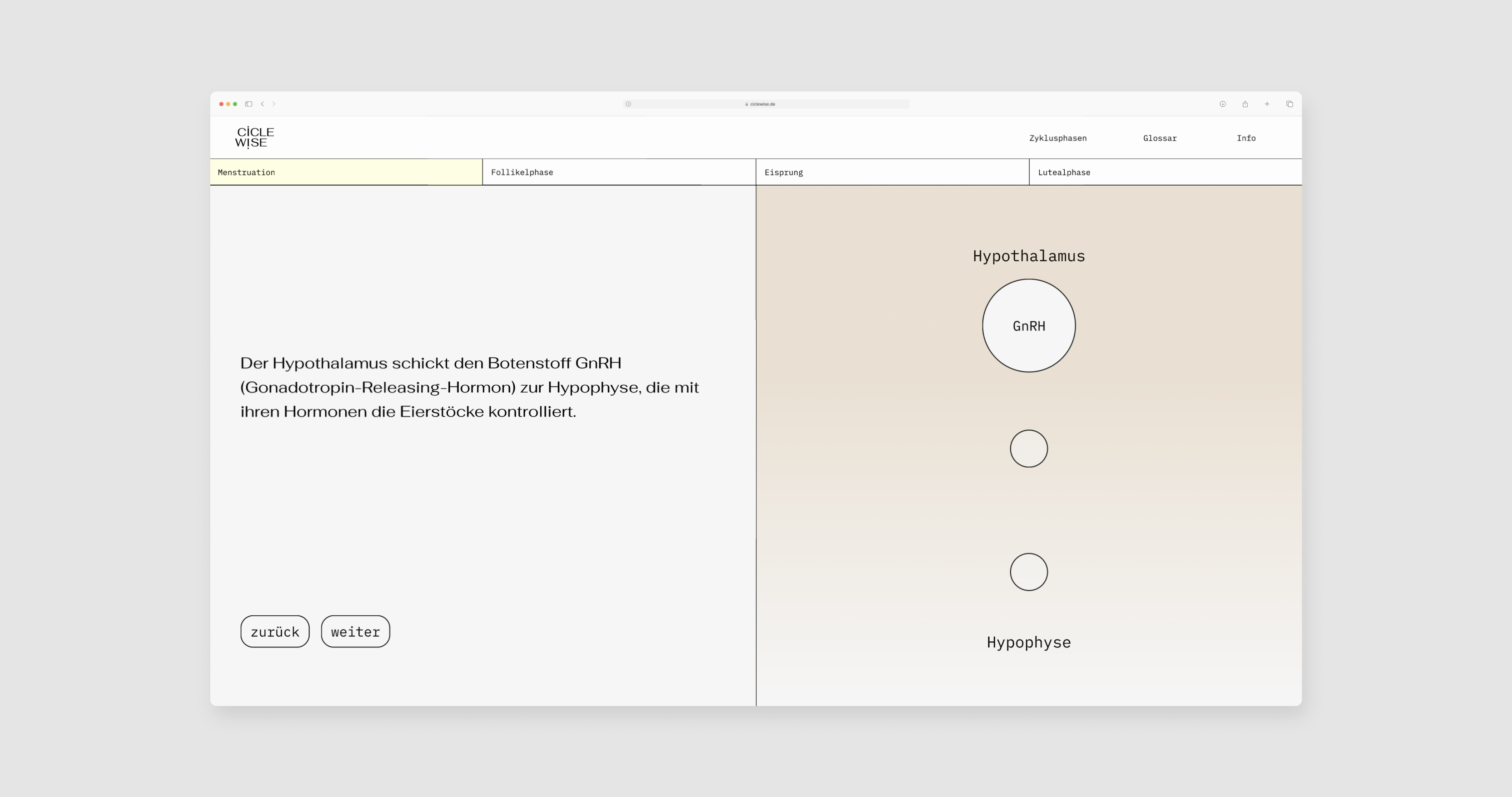
The website Ciclewise provides menstruating people with information about their menstrual cycle and the associated symptoms.
Most menstruating people struggle with individual cycle-related issues. Insufficient information, social stigmatisation and unsatisfactory medical consultations often mean that many women endure their individual symptoms and suffer from a reduced quality of life.
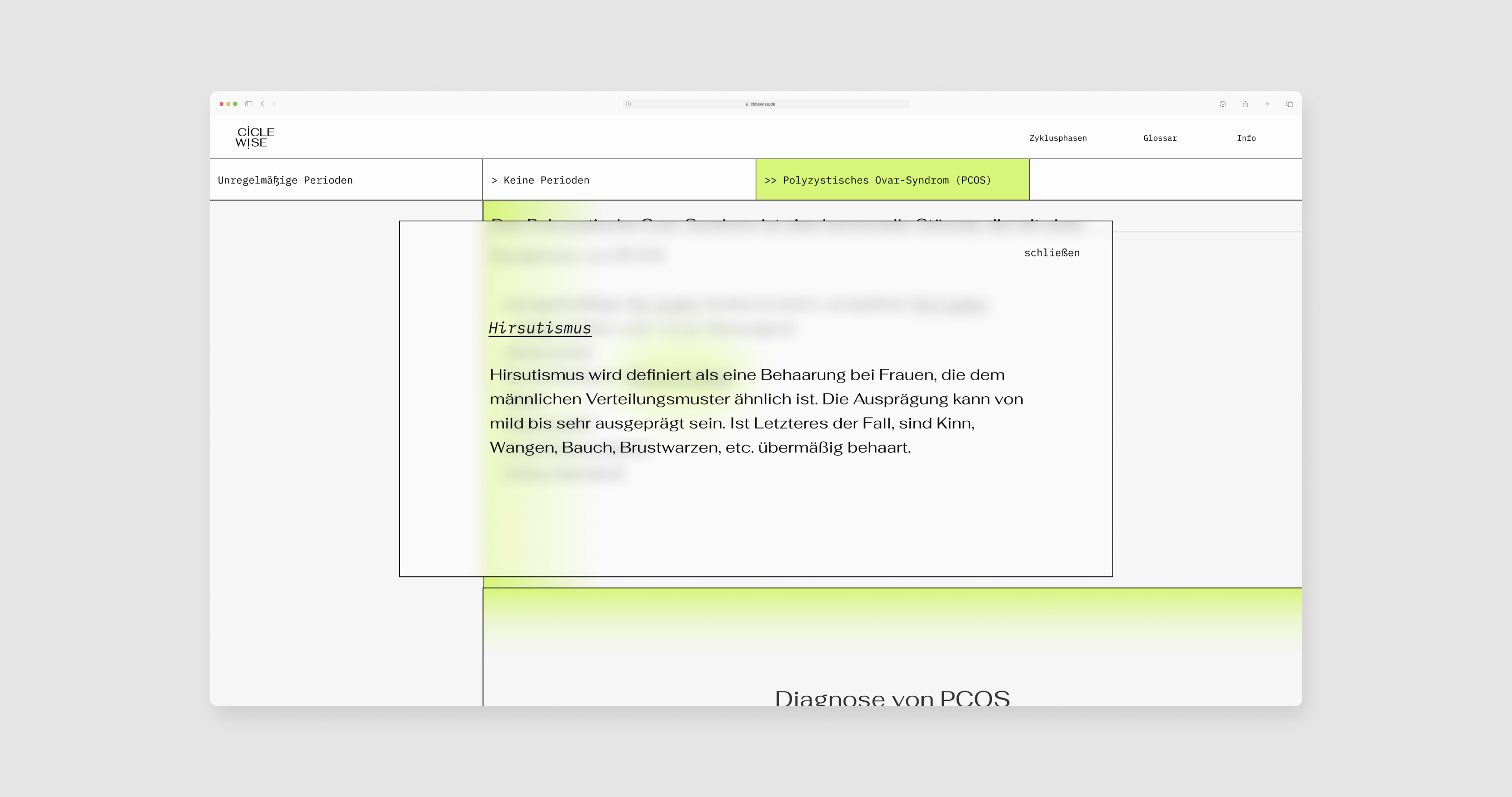
The free access to detailed information is a prerequisite for those affected to better understand their own bodies and take control of their health. The thesis project explores how information and data within gender medicine can be visually presented in a comprehensive manner, free from stereotypical representations.
BA Thesis project
Hochschule Hannover
2023

Design Process
Research
In the initial research phase, I explored menstruation-related studies, analysed the visual aesthetics of period products, and conducted a competitor analysis.
The following three key findings form the foundation and define the initial problem.
Finding 1
Study results
Study results
Menstruating individuals need a better understanding of their own bodies
Many menstruating individuals struggle to understand whether their symptoms, such as abdominal pain, fall within a normal range. This uncertainty is closely related to inadequate education in schools and insufficient medical guidance. Menstrual complaints are often portrayed as inevitable, something that must simply be accepted. The downplaying and normalisation of menstrual cycle symptoms lead many women and girls to seek medical help late or not at all.
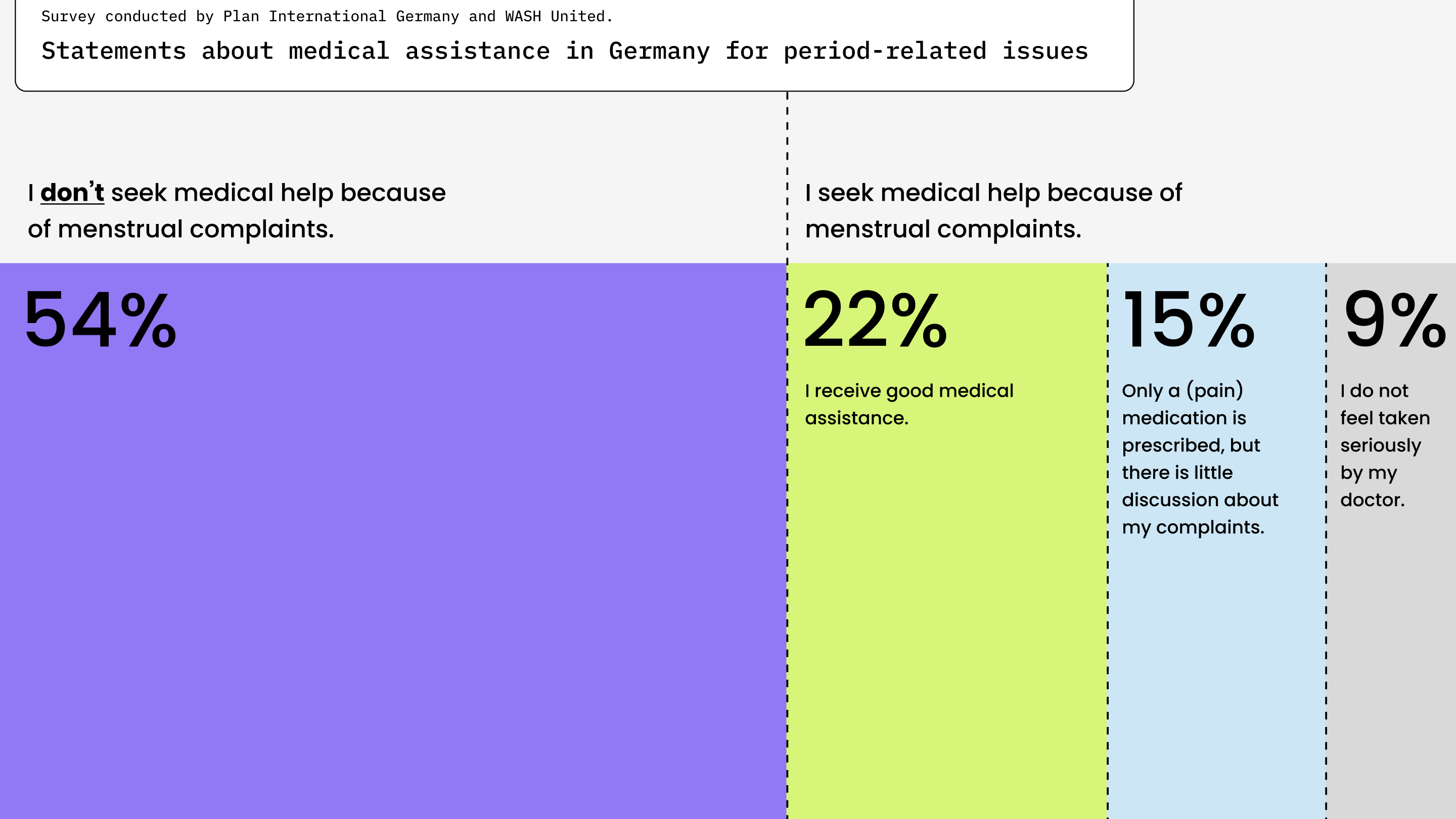
A study conducted by Plan International reveals that approximately 54% of menstruating individuals in Germany do not seek medical assistance for period-related issues. 15% report that doctors do not take sufficient time to address their complaints and only prescribe pain medication. The remaining 9% of women, dissatisfied with their medical visits, feel they are not taken seriously by medical personnel.1
These statistics highlight the existing challenges in dealing with menstrual discomfort and underscore the need for improved education and more empathetic medical care.
1 BALASKO, S., FERRY, A., HOFMANN, K., SCHRÖDER, A., TSCHACHER, A. and ULFERTS, C. (2022): Menstruation im Fokus. Erfahrungen von Mädchen und Frauen in Deutschland und weltweit. P.13. https://www.plan.de/fileadmin/website/04._Aktuelles/Kampagnen_und_Aktionen/Menstruationsumfrage/Plan-Umfrage_Menstruation-A4-2022_final.pdf [Accessed 30 March 2023]
Finding 2
Visual analysis of period products
Visual analysis of period products
Stereotypical design of menstrual products downplays the seriousness of the topic
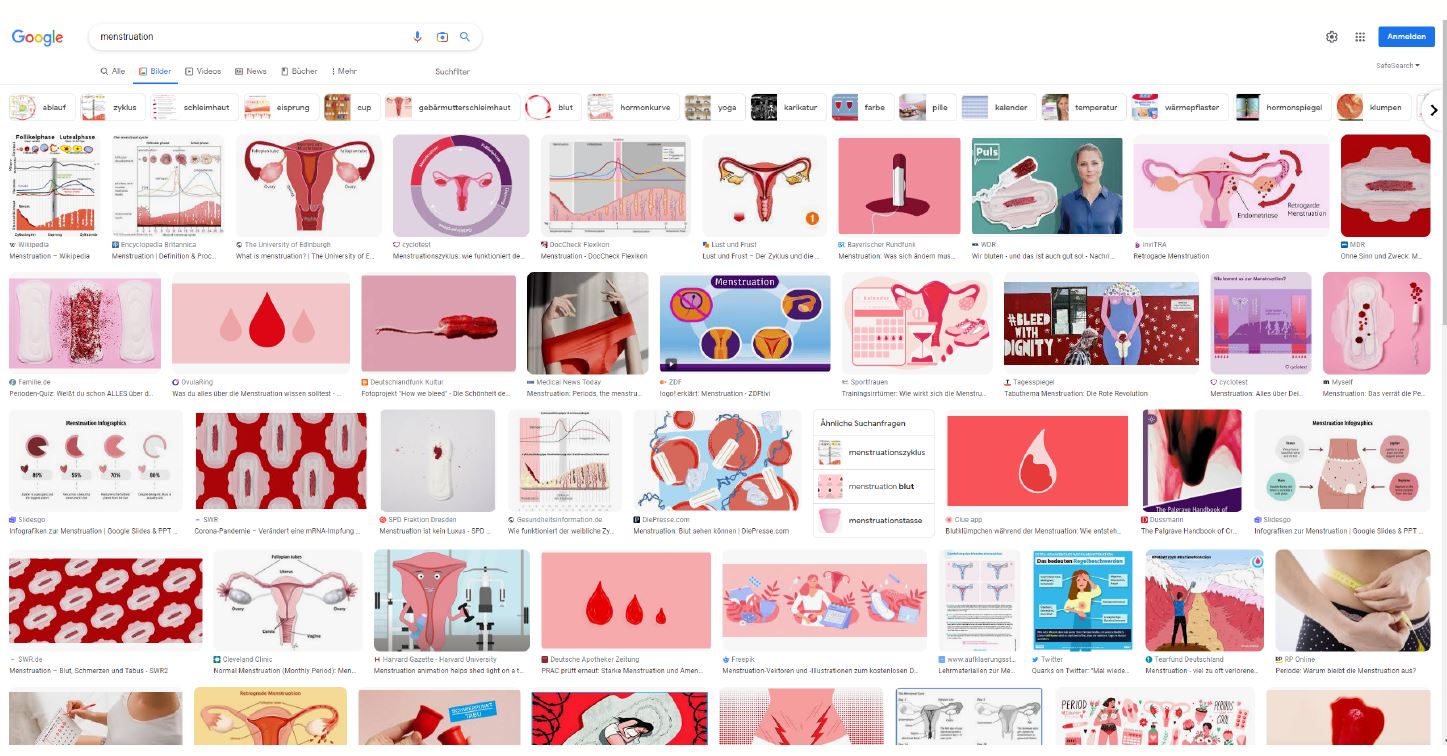
Educational materials, hygiene products, and apps frequently feature designs characterized by pink and floral motifs. In most cases menstruating individuals do not identify with this stereotypical design. The perceived "feminine" aesthetics are criticised for compromising functionality and downplaying the seriousness of the subject. A factual and gender-neutral representation is desired.
»they have tried to make it ‘feminine’ by adding flowers...
It makes me feel like you are trying to ‘dumb it down’ for me.«2
2 EPSTEIN, D., LEE, N., KANG, J., AGAPIE, E., SCHROEDER, J., PINA, L., FOGARTY, J., KIENTZ, J. and MUNSON, S. (2017): Examining Menstrual Tracking to Inform the Design of Personal Informatics Tools. In: Proceedings of the SIGCH Conference on Human Factors in Computing Systems. Denver. P. 6882
Finding 3
Competitor analysis of Flo, a period-tracking app with educational articles, and FEMNA, an online therapy platform
Competitor analysis of Flo, a period-tracking app with educational articles, and FEMNA, an online therapy platform
Education about menstrual health comes with financial expenses
There is a lack of freely accessible and high-quality educational offerings. Period trackers with subscription models and expensive online therapies exclude individuals of specific age groups or social strata from accessing menstrual cycle knowledge. The cost factor poses a significant barrier. Specifically, a therapy costing 500 euros, meant to be a fundamental aspect of medical care, is financially inaccessible for many menstruating individuals.
User Personas
Every menstruating person experiences the cycle differently. To gain a clear understanding of diverse needs, I defined three distinct user personas. Empathising with a target audience later on in the design process helped me to create a user-centric solution.
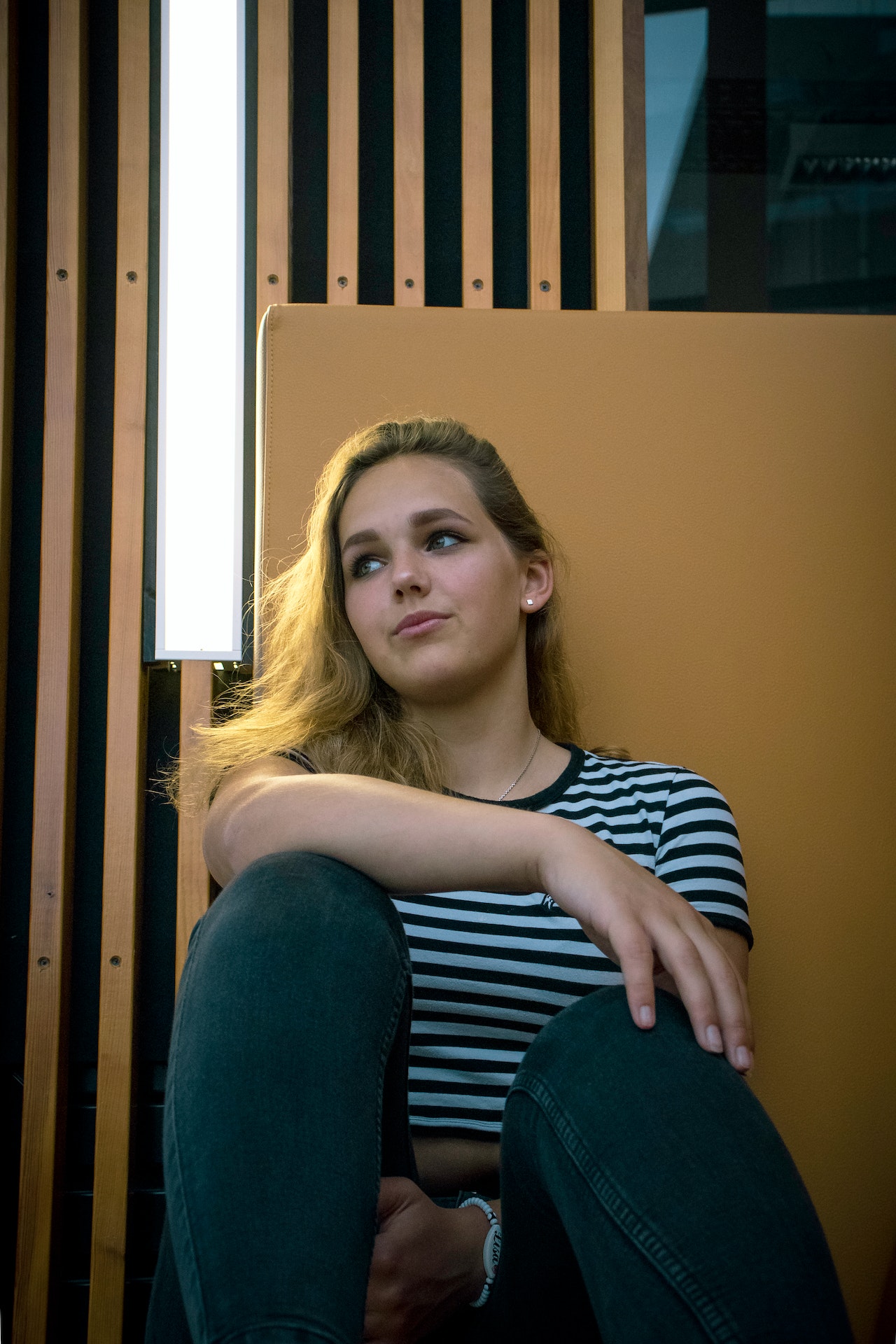
Marie Schneider
15 years old
Secondary school student
15 years old
Secondary school student
Newly experiencing periods, Marie seeks reassurance about whether her heavy menstrual bleeding is normal.
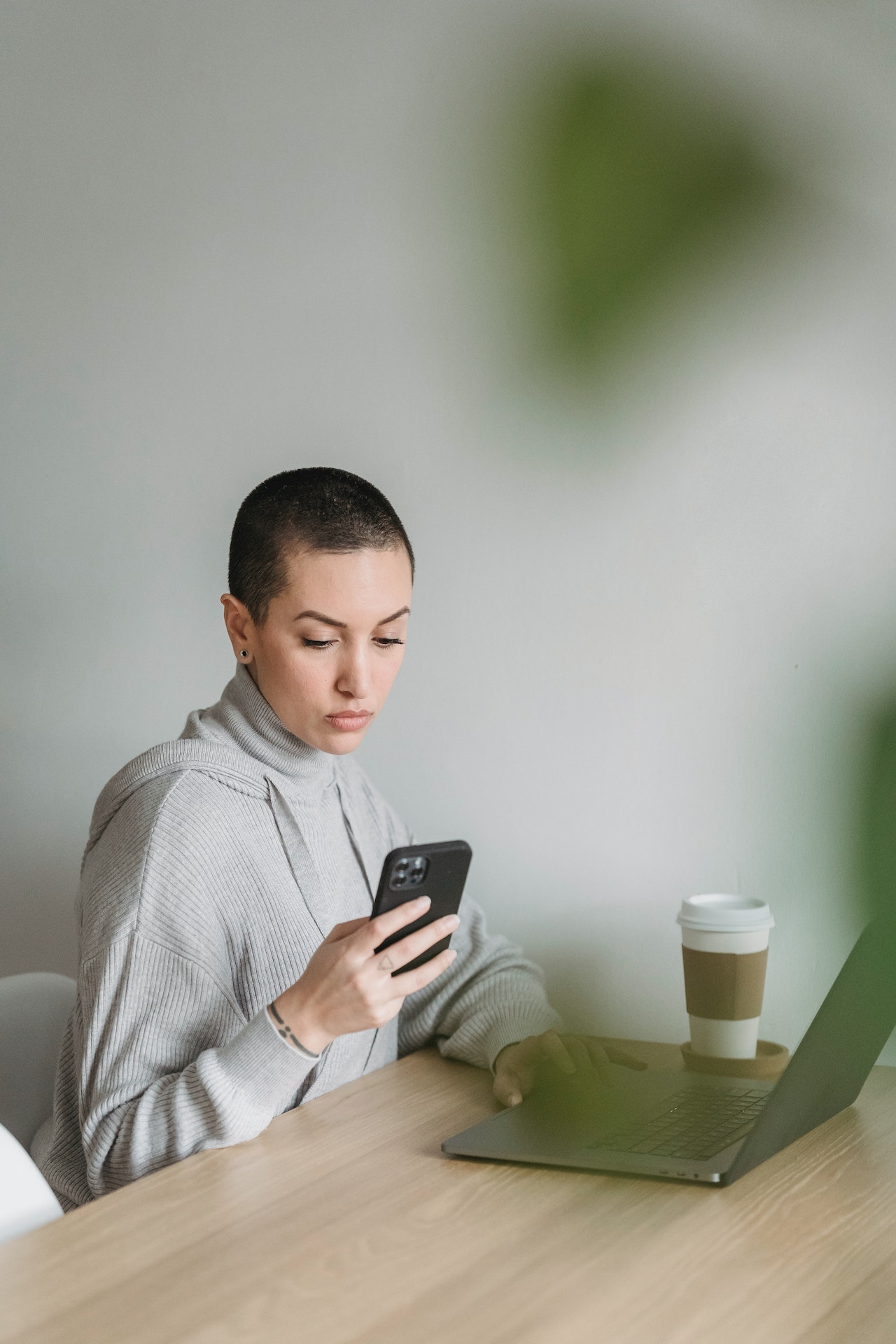
Emilia Kaminski
30 years old
Social Media Manager
30 years old
Social Media Manager
After her concerns are not taken seriously by the doctor, Emilia wants to independently search for the cause of her PMS symptoms.
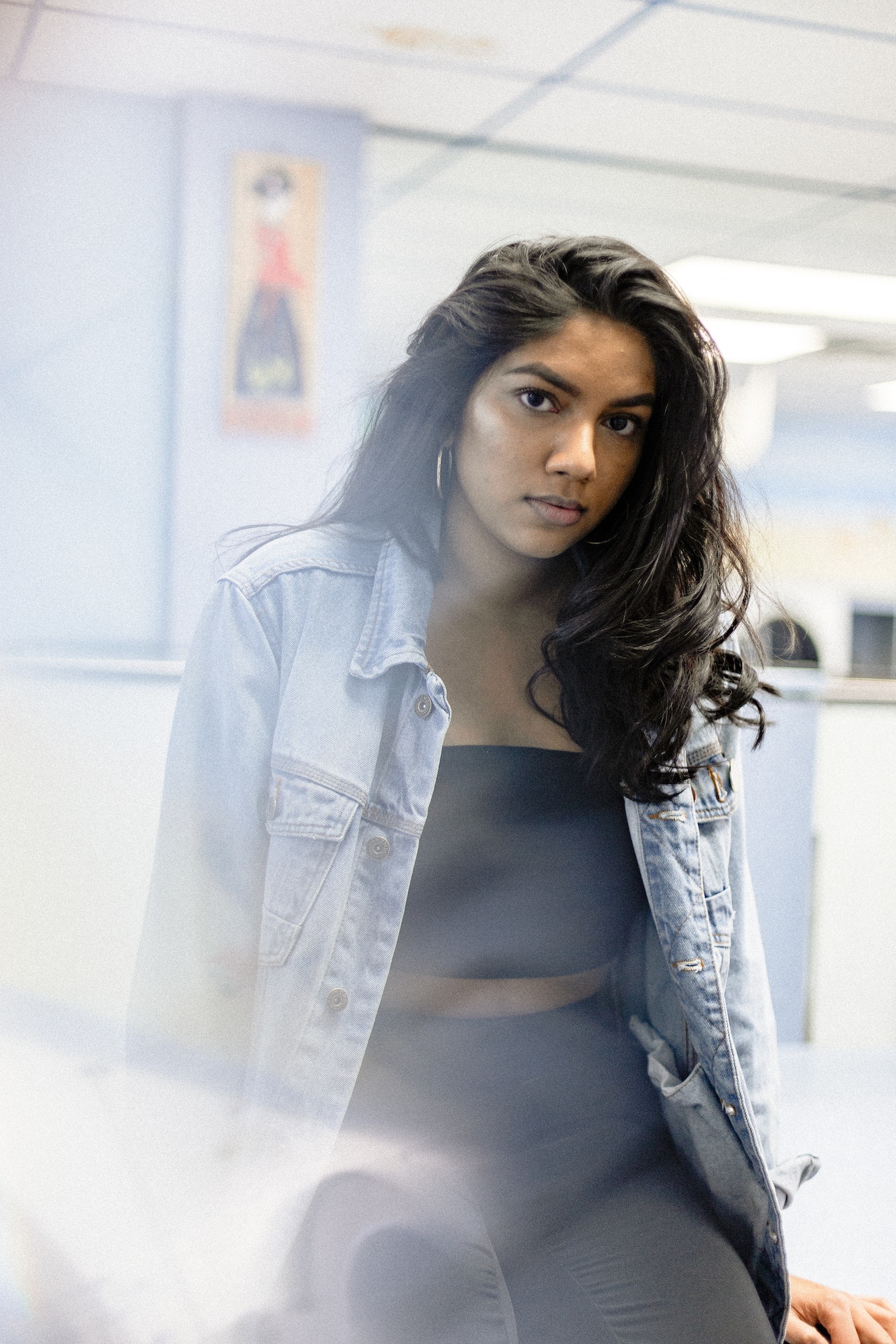
Isabella Voss
20 years old
Physics student
Struggling with severe period pain, Isabella seeks a sustainable solution beyond pain medication or contraceptives.
20 years old
Physics student
Struggling with severe period pain, Isabella seeks a sustainable solution beyond pain medication or contraceptives.
Hochschule Hannover
Website — Ciclewise
2023
Website — Ciclewise
Hochschule Hannover
2023